
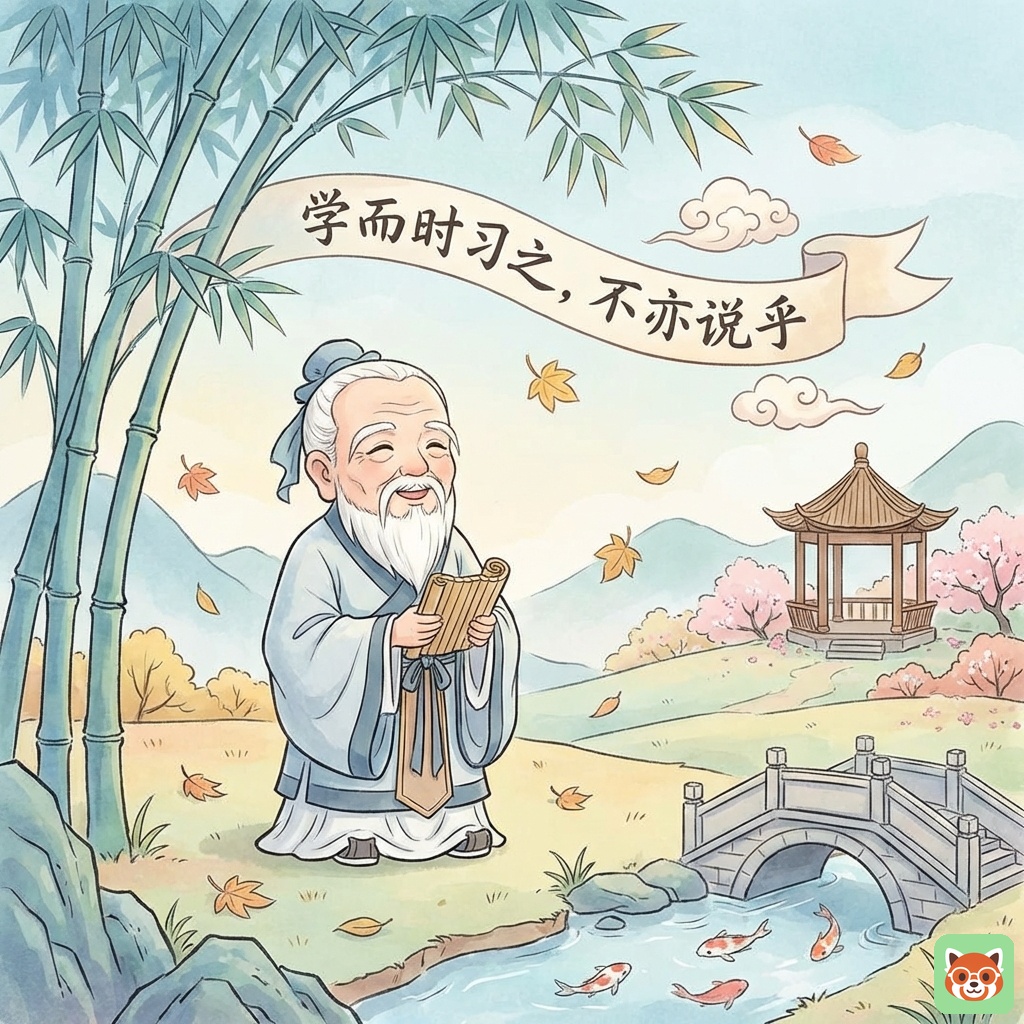
学而时习之,不亦说乎?
To learn and then do, is that not a pleasure?
— Confucius (孔子), Analects 1.1
Understanding the Quote
This is the very first saying in the Analects (论语), Confucius's seminal work. It establishes learning as a joyful, continuous process—not a one-time event.
Breaking it down:
- 学 (xué) — to learn/study
- 而 (ér) — and/then
- 时 (shí) — frequently/always
- 习 (xí) — to practice/review
- 之 (zhī) — it (what has been learned)
- 不亦...乎 (bù yì...hū) — isn't it...?
- 说 (yuè) — to be pleased/happy (same character as 说 but read yuè)
Why It Matters Today
Confucius understood something crucial: learning without application is incomplete. The true joy of learning comes from practicing what you study. Whether it's a language, a skill, or knowledge—applying it brings satisfaction.
This Sunday, consider: What have you learned recently that you could practice today?
Ready to practice your Chinese?
Explore our flashcards and start applying what you learn today!
Start Learning