
Blind Men Touching the Elephant
Story behind the idiom: 盲人摸象 - Blind Men Touching the Elephant
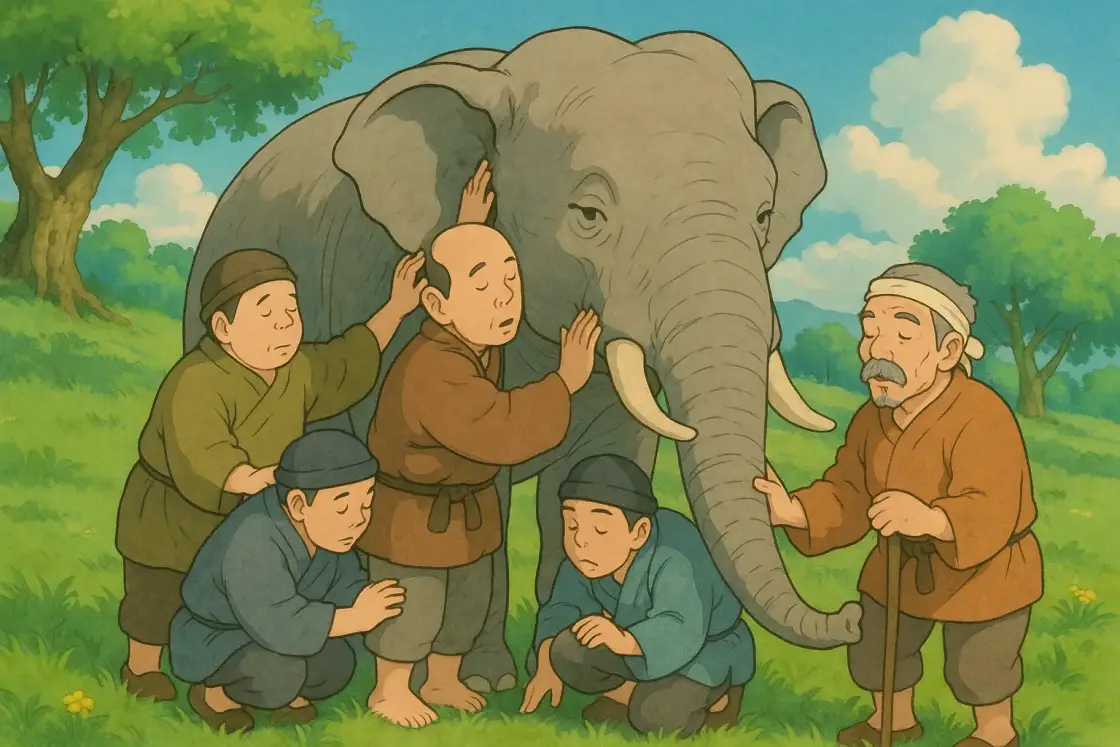
很久很久以前,有四个盲人很想知道大象长什么样。Long, long ago, there were four blind men who really wanted to know what an elephant looked like.可他们看不见,只能用手摸。But they couldn't see it and could only touch it with their hands.
第一个盲人摸到了大象的牙齿,就说:“我知道了!大象就像一个大萝卜!”The first blind man felt the elephant's tusks and said, 'I know it! The elephant is like a big radish!'
第二个盲人抓住大象的耳朵,大声反驳:“不对不对,大象明明是一把大扇子!”The second blind man grabbed the elephant's ear and loudly retorted, 'No, no, the elephant is clearly a big fan!'第三个盲人抱住大象的腿直摇头。The third blind man hugged the elephant's leg and shook his head.你们都错了,它根本是一根粗柱子!'You're all wrong; it's simply a thick pillar!'第四个盲人扯着大象的尾巴笑。The fourth blind man tugged at the elephant's tail and laughed.大象哪有那么粗?不过是一根绳子嘛!'An elephant isn't that thick; it's just a rope!'
四人吵得面红耳赤,都咬定自己摸到的才是真的大象。The four men argued until they were flushed red in the face, each insisting that what they felt was the true elephant.可实际上——他们全都错了,因为没人看到大象的全貌。But in reality—they were all wrong because no one saw the elephant's full form.
后来,人们把这个故事叫作“盲人摸象”,专笑那些只凭片面就下结论的人。Later, people called this story 'Blind Men and the Elephant,' mocking those who draw conclusions from fragments.如今我们用它提醒自己:看事要完整,方知真相。Now we use it to remind ourselves: one must see the whole picture to know the truth.
比如,一个外国人吃了口四川火锅就喊:“中国菜全都辣死人!”For example, a foreigner who takes a bite of Sichuan hot pot might exclaim, 'All Chinese food is unbearably spicy!'
你便能笑他:“别‘盲人摸象’啦!”You can then laugh at him and say, 'Stop the blind-man-touching-elephant act!'粤菜清淡,淮扬菜鲜甜——您才尝了多少呢?Cantonese cuisine is mild, Huaiyang cuisine is fresh and sweet—how much of it have you truly tasted?
Want to read along with audio? Every story in the Literate Chinese app is narrated by a native speaker — in Mainland or Taiwan Mandarin — so you can listen while you read, and tap any word to save it as a flashcard. See what's in the app.