
Advanced Chinese Reading Practice (HSK 5–6)
Graded material thins out above HSK 4 — everywhere, including here. These are the 27 free stories on this site estimated at HSK 5 or above, plus 7 Tang poems, and a plan for the step that really matters at this stage: moving on to native Chinese.
- 27advanced stories
- 7Tang poems
- 5,386words through HSK 6
- 301characters in a typical story
What advanced Chinese reading looks like
Advanced reading (HSK 5 and 6) is dense: idioms (成语), formal connectors like 从而, 何况 and 以至于, literary turns of phrase, and long sentences with several clauses. Our stories at this level are short but dense — Journey to the West chapters, legends and brand histories packed with names and less common words — and the real goal becomes bridging to native books, news and web novels.
- 3,592–5,386 words / 1,527–1,940 characters — the 2026 HSK 3.0 lists through HSK 5 and through HSK 6.
- The 27 stories here run from 102 to 1,220 characters; sentences average 19.5 characters.
- 94% of their characters are HSK 1–6 characters — the rest come from names, idioms and literary vocabulary.
Read an advanced story right now
Pinyin off, translation off: read the opening and see how much you get on the first pass. Tap words only when the sentence stops making sense.
很久以前,在古代中国,勇敢的将军项羽带着士兵渡过宽阔的江河。A long time ago, in ancient China, the brave general Xiang Yu led his soldiers across the wide river.大家站在对岸,看着前方整齐排队的敌军,心里不免害怕——如果打败了,就再也回不了家。Everyone stood on the opposite bank, looking at the enemy's neatly lined troops in front, and couldn't help but feel afraid—if they were defeated, they would never be able to return home.
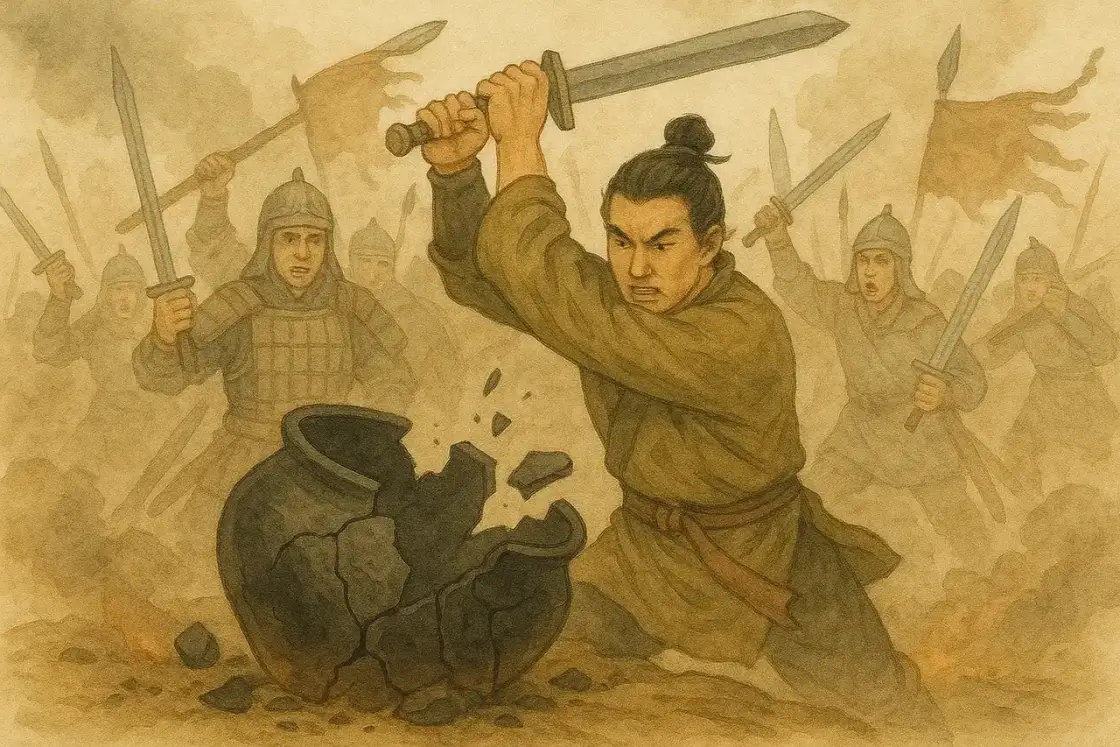
深夜,项羽举刀高喊:「破釜沉舟!」Late at night, Xiang Yu raised his saber and shouted: "Break the cauldrons and sink the boats!"士兵们互相看着:锅子是煮饭用的,船是回家的工具,如果砸锅、沉船,还怎么活?The soldiers looked at each other: the cauldrons were for cooking, the boats were for going home; if they smashed the cauldrons and sank the boats, how could they survive?不过他们知道将军的意思,于是开始动手:有人抬起沉重的铁锅砸在岩石上,有人一起把木船推进江里,让它翻覆、沉没。But they understood the general's meaning, so they began to take action: some lifted heavy iron cauldrons and smashed them on the rocks, others pushed the wooden boats into the river together, letting them capsize and sink.当最后一艘船沉到江中心,大家明白,退路没了,只能向前。When the last boat sank to the center of the river, everyone understood that there was no retreat, only to move forward.
天亮后,风呼呼吹,战鼓隆隆响。After dawn, the wind blew fiercely, and the war drums thundered.没有退路的士兵拔刀冲上去,刀光像闪电,喊声震天。The soldiers with no retreat drew their sabers and charged forward, their blade lights like lightning, their shouts shaking the sky.他们都知道:胜利是唯一的出路。They all knew: victory was the only way out.打到黄昏,项羽终于大破敌军,凯旋回营。Fighting until dusk, Xiang Yu finally defeated the enemy army and returned to camp in triumph.
从此,「破釜沉舟」就成了下定决心、不留后路的代名词。From then on, "breaking the cauldrons and sinking the boats" became a synonym for making up one's mind and leaving no way back.就像莎拉辞掉稳定工作,卖掉汽车,全心经营自己的烘焙坊——她也是真正地破釜沉舟,只能往前,没有回头。Just like Sarah, who quit her stable job, sold her car, and wholeheartedly ran her own bakery—she truly broke the cauldrons and sank the boats, only able to move forward, with no turning back.
Check your understanding
项羽为什么要士兵砸锅、沉船?
士兵们没有退路以后,打得怎么样?
什么时候可以说一个人“破釜沉舟”?
All 27 advanced stories
Sorted easiest to hardest within each theme. Estimated level is HSK 5 or above (HSK 3.0).
Chinese Idioms 3 stories
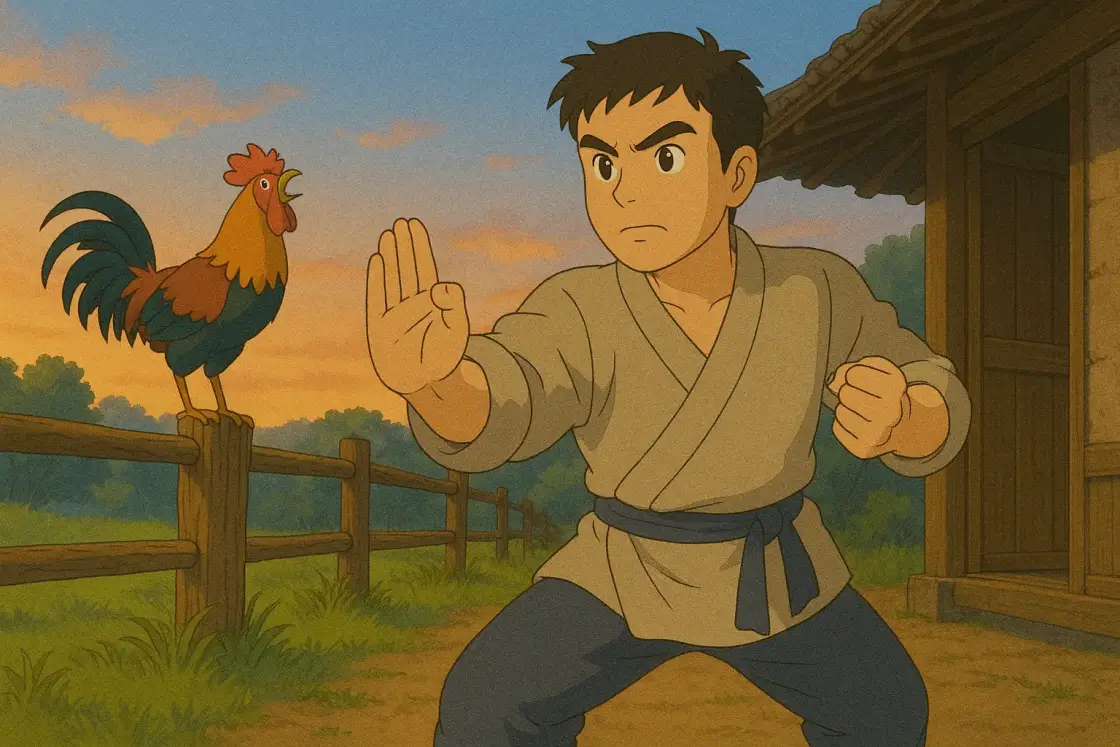 Rise at the Rooster’s Crow从前东晋时期,有个热血青年叫祖逖。他…
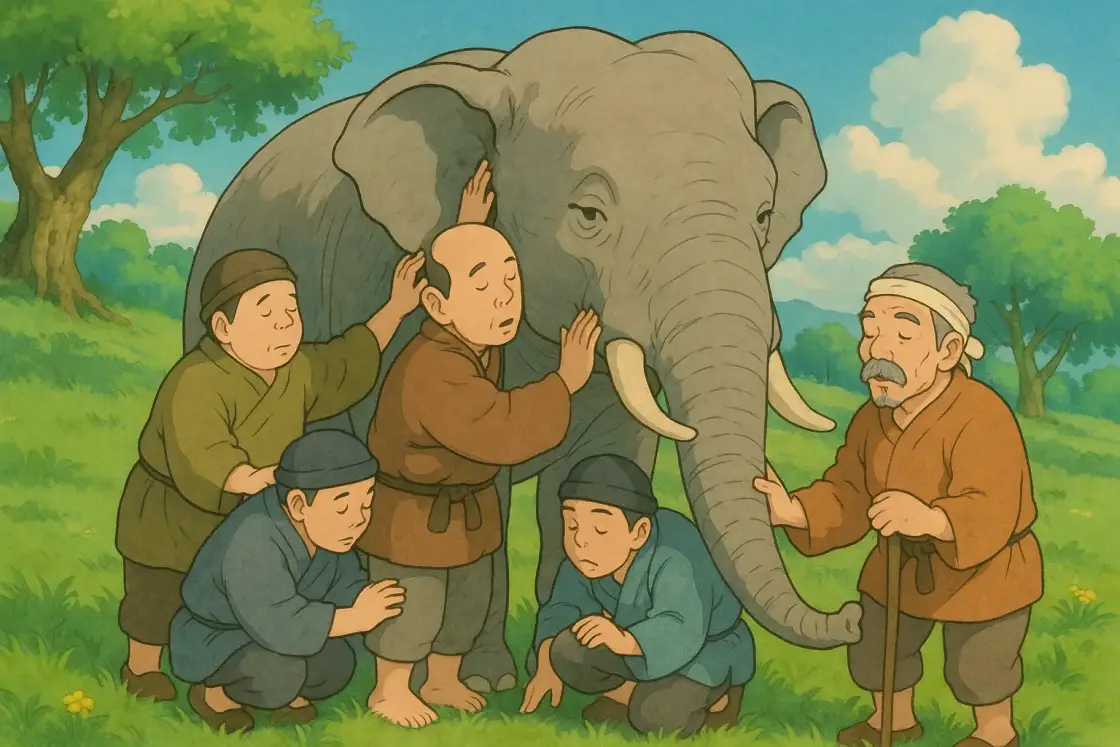 Blind Men Touching the Elephant很久很久以前,有四个盲人很想知道大象…
- Breaking Pots and Sinking Boats很久以前,在古代中国,勇敢的将军项羽…
Journey to the West 8 stories
 Chapter 1: The Birth of the Monkey King海外有座花果山,山顶立着一块闪闪发光…
- Chapter 3: The Havoc in Heaven孙悟空嫌龙宫借的兵器太轻,抢走定海神…
- Chapter 4: Tang Sanzang’s Pilgrimage for Scriptures唐朝的玄奘和尚发愿去西天取经。观音菩…
- Recruiting Bajie at Gao Village师徒走到高老庄,一户人家正哭哭啼啼…
- Chapter 6: Recruiting Sha Monk at the Flowing Sand River一条大河拦住去路,浪里钻出红发妖怪…
- Chapter 8: The Clever Battle with the Red Boy火云洞前,红孩儿喷出三昧神火,烧得八…
- Chapter 9: Crossing the Flaming Mountain火焰山热得像蒸笼。土地公说:“须借铁…
- Chapter 10: The Kingdom of Women and the True Scriptures女儿国没有男人。国王一见唐僧就笑…
Christian Stories 4 stories
 The Restoration of the Gospel神是我们的天父,祂照着自己的形像造了…
 The Sermon on the Mount - Part 1 (Matthew 5)1耶稣看见这许多的人,就上了山,既已…
- The Sermon on the Mount - Part 2 (Matthew 6)1你们要小心,不可将善事行在人的面前…
- The Sermon on the Mount - Part 3 (Matthew 7)1你们不要论断人,免得你们被论断。2…
Business Stories 8 stories
 The Origin of Airbnb在2007年冬季,两位住在旧金山的室…
 The Story of Post-it Notes很多人日常会用到一种小纸条,叫做“便…
 The Space Pen太空人在环绕地球时发现,普通原子笔在…
 The Dream Creator: The Story of Walt Disney很久以前,有一个叫华特的男孩。他特别…
 The Story of Pokémon很多人都喜爱“宝可梦”,但是你知道宝…
 The McGriddle在1990年代末,麦当劳正寻找下一个…
 The Story of PatagoniaPatagonia是一家以独特价值观…
 The Story of Flamin' Hot Cheetos很多人都喜爱辣味奇多,这种零食香辣可…
More Stories 4 stories
 Touching the Elephant从前,有四个人,眼睛都看不见。他们想…
 Sun Yat-sen: The Doctor Who Chose Revolution (Part 2)一八九四年,中国在战争中被日本打败…
 The Cat in Boots从前,一个磨坊主去世后,留给三个儿子…
 The Snow Queen从前,有一对好朋友叫凯和格尔达。一天…
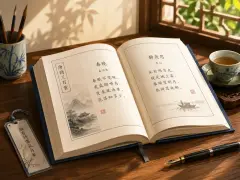
Classical Tang poems 7 poems
Only 18–20 characters each — too short for a level estimate — but written in classical Chinese, so they belong here: every native speaker knows them, and they reward slow, line-by-line reading with pinyin and the translation on.
Bridging to native Chinese
At HSK 5–6 the goal changes: graded stories are no longer the destination, they are the ramp. A plan that works:
- Build stamina on long graded texts. Difficulty is not only rare words — it is staying with a text for 20 minutes. Our longest free stories (The Sermon on the Mount - Part 1 (Matthew 5) — 1,220 characters; The Dream Creator: The Story of Walt Disney — 738 characters; After Twenty Years — 514 characters) are easier in vocabulary but make good stamina tests: if you can read one in a sitting without the translation, you are ready for native material.
- Read adapted classics before originals. Journey to the West, the Art of War and Liaozhai-style strange tales are far easier in modern adaptation, and you will know the story when you meet the original.
- Pick native material with context. Young-adult novels, web novels in a genre you love, and news about events you already followed in English. Knowing the plot covers for the words you don't.
- Learn idioms from their stories. A 成语 sticks when you know its story — start with our idiom stories (守株待兔, 塞翁失马 and more).
- Keep reading easy things too. Speed comes from volume at 98% known words, so mix one hard text with several comfortable ones.
Advanced grammar in these stories
- 明明 + Fact,却 / 还 / 怎么 …Obviously (yet…): 明明practised in Blind Men Touching the Elephant
- 何必 + Verb Phrase(呢)?Why bother: 何必practised in Chapter 8: The Clever Battle with the Red Boy
- 宁可 + Lesser Evil,也不 + Rejected OptionWould rather: 宁可…也不practised in The Sermon on the Mount - Part 1 (Matthew 5)
- 由于 + Cause,(因此)+ EffectFormal cause and effect: 由于…因此practised in The Story of Flamin' Hot Cheetos
- Event 1,于是 + Event 2And so: 于是practised in Breaking Pots and Sinking Boats
- Statement,(更)何况 + Stronger Case(呢)?Let alone: 何况practised in The Sermon on the Mount - Part 2 (Matthew 6)
- Do X,以免 / 免得 + Bad OutcomeTo avoid: 以免 / 免得practised in The Sermon on the Mount - Part 3 (Matthew 7)
- …,难免 + Verb Phrase / 是难免的Hard to avoid: 难免practised in The Sermon on the Mount - Part 1 (Matthew 5)
Key HSK 5–6 words in these stories
These are the HSK 5–6 words (HSK 3.0 list) that turn up most often across the stories on this page, so they are the ones worth knowing before you start — you'll see each of them again and again. Browse the full HSK 5 word list and full HSK 6 word list for everything else.
- 当當dàngto treat asin 9 of 27 stories
- 便biànconvenientin 7 of 27 stories
- 为爲wèivariant of 为/為 (wéi)in 7 of 27 stories
- 中zhòngto hit (a target)in 6 of 27 stories
- 从前從前cóng qiánin the pastin 4 of 27 stories
- 于於yúsurname Yuin 4 of 27 stories
- 如何rú héhowin 4 of 27 stories
- 如今rú jīnnowadaysin 3 of 27 stories
- 冲沖chōngto dashin 3 of 27 stories
- 自由zì yóufreedomin 3 of 27 stories
- 公主gōng zhǔprincessin 3 of 27 stories
- 虫子蟲子chóng ziinsectin 3 of 27 stories
- 同tóngsamein 3 of 27 stories
- 救jiùto savein 3 of 27 stories
- 体验體驗tǐ yànto experiencein 3 of 27 stories
- 神shéndivinein 3 of 27 stories
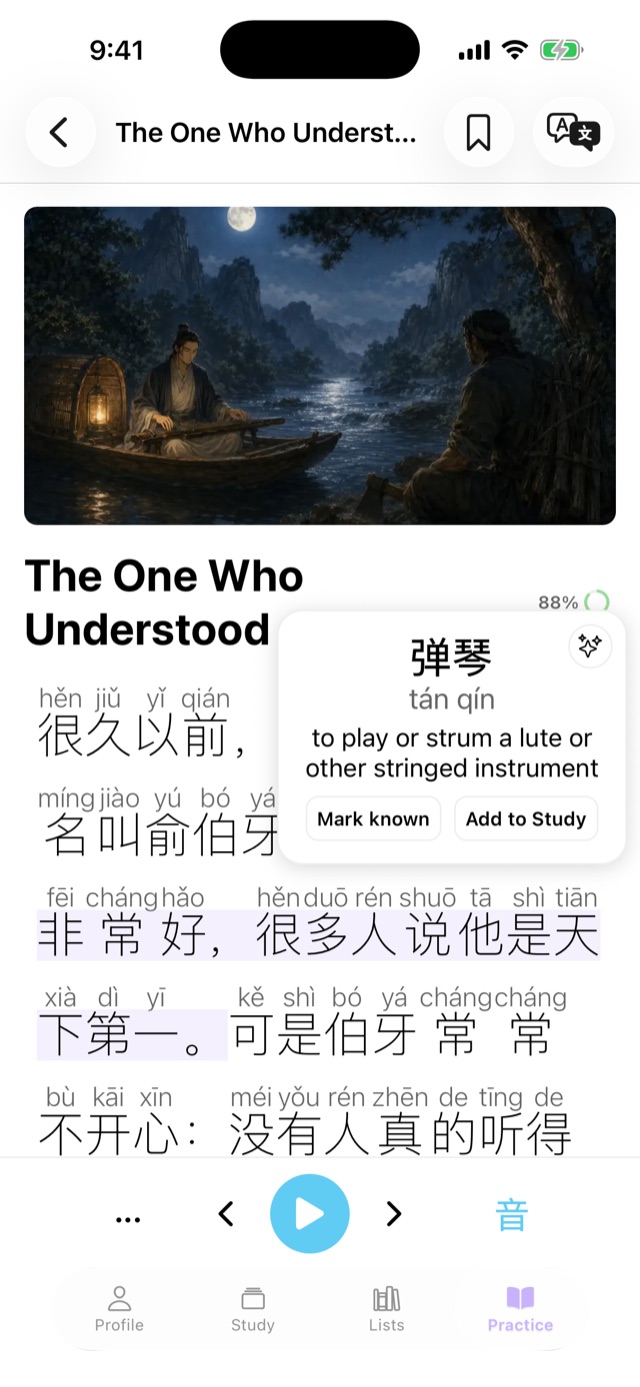
Long-form reading in the app
The app doesn't hide a stash of extra HSK 6 stories — on our estimate, the hardest material is the same set you see above. Where it helps an advanced reader is long, connected reading at upper-intermediate level, with native audio in Mainland or Taiwan Mandarin and tap-to-save flashcards:
- Journey to the West — the Monkey King saga, chapter by chapter. 10 parts, estimated HSK 4–6; 10 free on the web.
- The Art of War — Sunzi, retold in readable modern Chinese. 14 parts, estimated HSK 3–4; 2 free on the web.
- Seneca's Letters — Stoic letters adapted into Chinese. 10 parts, estimated HSK 3; 2 free on the web.
- Strange Tales — ghost and fox-spirit tales in the Liaozhai tradition. 14 parts, estimated HSK 3–4; 2 free on the web.
- Ming Dynasty Tales — classic stories from the Ming story collections. 7 parts, estimated HSK 3; 1 free on the web.
- The Hound of Bai Manor — a full Sherlock Holmes novel, reimagined with Detective Shen Mo. 12 parts, estimated HSK 3–4; 2 free on the web.
- Book Summaries — Atomic Habits, How to Win Friends, The Psychology of Money, Deep Work and Mindset. 20 chapters in all.
Every story shows how familiar its words are to you, so you can find the ones that stretch you.


Frequently asked questions
How many characters do I need to read at HSK 5–6?
The 2026 HSK 3.0 syllabus has 3,592 words (1,527 characters) through HSK 5 and 5,386 words (1,940 characters) through HSK 6. Comfortable reading of native novels and news is usually put at 2,500–3,000 characters, which is why HSK 7–9 exists.
Is HSK 5–6 reading hard?
Yes — and the difficulty is different. Grammar is mostly known; what slows you down is vocabulary breadth, idioms and written style. A native novel at this stage often means a new word every line, which is why long graded texts and adapted classics are still worth your time.
Why are there so few advanced stories?
Graded readers are most valuable below HSK 5, so that is where most graded writing — ours included — is concentrated. We would rather be honest about the count (27 stories plus 7 poems on the web) than pad it. At this level, native material becomes the main course and graded stories the warm-up.
What should I read after graded readers?
Start with native material that has strong context: young-adult and children's novels, web novels in a genre you already like, and news on stories you have followed in English. Keep a tap-to-define reader handy and accept a few unknown words per page.
Also useful: Not sure of your level? Take the 2-minute character test · HSK 5 and HSK 6 word lists · How many characters to read Chinese · Traditional reading practice