
Intermediate Chinese Reading Practice (HSK 3–4)
The intermediate stage is where reading either takes off or stalls. This page is the shortcut: series you can binge, nonfiction worth your time, and a plan for moving from short stories to whole books.
- 129HSK 3 stories
- 48HSK 4 stories
- 31multi-part series
- 997–1,994words through HSK 3–4
What changes at the intermediate level
Somewhere around HSK 3, reading changes character. Texts stop being lines of dialogue and become paragraphs with reasons, contrasts and opinions; by HSK 4, nonfiction and formal vocabulary arrive. Most learners don't stall because the grammar is too hard — they stall because they stop reading enough. This page is built to keep you reading.
| HSK 3 | HSK 4 | |
|---|---|---|
| Words / characters through the level (2026 lists) | 997 / 655 | 1,994 / 1,096 |
| Free stories on this site | 129 | 48 |
| Typical story length | 136 characters | 261 characters |
| Average sentence | 14.9 characters | 16.8 characters |
| Characters within the level's HSK lists | 91% | 90% |
| New grammar | 因为…所以, 虽然…但是, 把, 被, 是…的, complements | 既然, 不管…都, 连…都, 只要…就, formal vocabulary |
Want everything at one level instead of our picks? See the complete HSK 3 list and HSK 4 list. Not sure where you are? Take the 2-minute character test.

Start a series right now
This is part 1 of Xiao Guo at Work — following one series is the best kind of reading at this level. Read with pinyin off; tap a word only when the sentence stops making sense.
小郭每天早上七点起床。Xiao Guo wakes up at seven every morning.他在公司上班,住在地铁站附近。He works at a company and lives near the subway station.今天他起得有点晚。Today he got up a little late.
他赶紧刷牙、洗脸、吃面包。He quickly brushes his teeth, washes his face, and eats some bread.出门的时候,他看到外面下雨了。When he goes out, he sees it’s raining outside.他没带伞,只好跑去地铁站。He didn’t bring an umbrella, so he has to run to the subway station.地铁里人很多,他站在门口。There are many people in the subway; he stands by the door.
一个女孩在看书,旁边的老人听音乐。A girl is reading a book, and an old man nearby is listening to music.小郭想着:“今天一定要早点到公司。”Xiao Guo thinks, “I must get to the office early today.”
Check your understanding
小郭今天早上为什么赶紧刷牙、洗脸?
小郭为什么跑去地铁站?
在地铁里,小郭站在哪里?
Series worth binge-reading
The single best habit at the intermediate level is following one story across several parts. Names, places and vocabulary repeat, so every part is easier than the last. These are the longest free series at HSK 3–4 on the site:
- Xiao Guo at WorkPart 1Part 2Part 3Part 4Part 5Part 6Part 7Part 8Part 9Part 10
 Day in the Life of Lil JonPart 1Part 2Part 3Part 4Part 5Part 6Part 7Part 8
 The Doctor's DiaryPart 1Part 2
 The Hound of Bai ManorPart 1Part 2
 The Speckled BandPart 1Part 2
 Seneca's LettersPart 1Part 2
 The Art of WarPart 1Part 2
 Day in the Life of an InfluencerPart 1Part 2
Nonfiction, culture and idioms
Reading about something you're curious about is the easiest way to read more. The gentlest three in each collection:
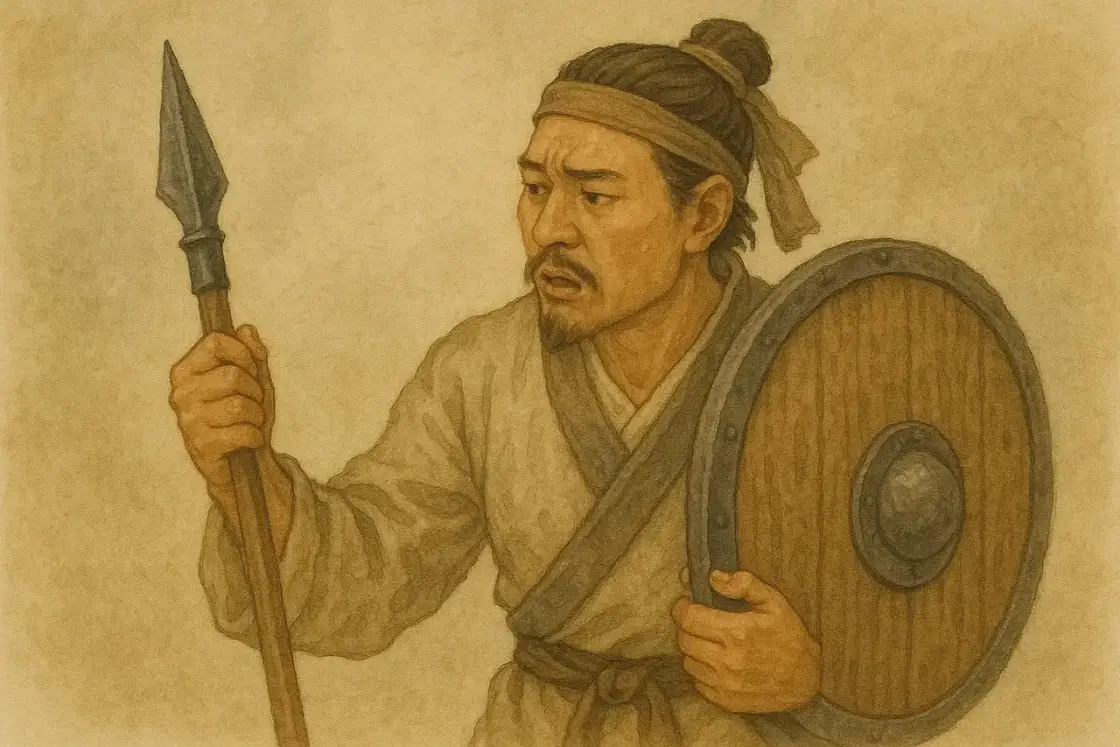
Historical Figures
Real lives, real history: Confucius, Li Bai, Wu Zetian, Zheng He.



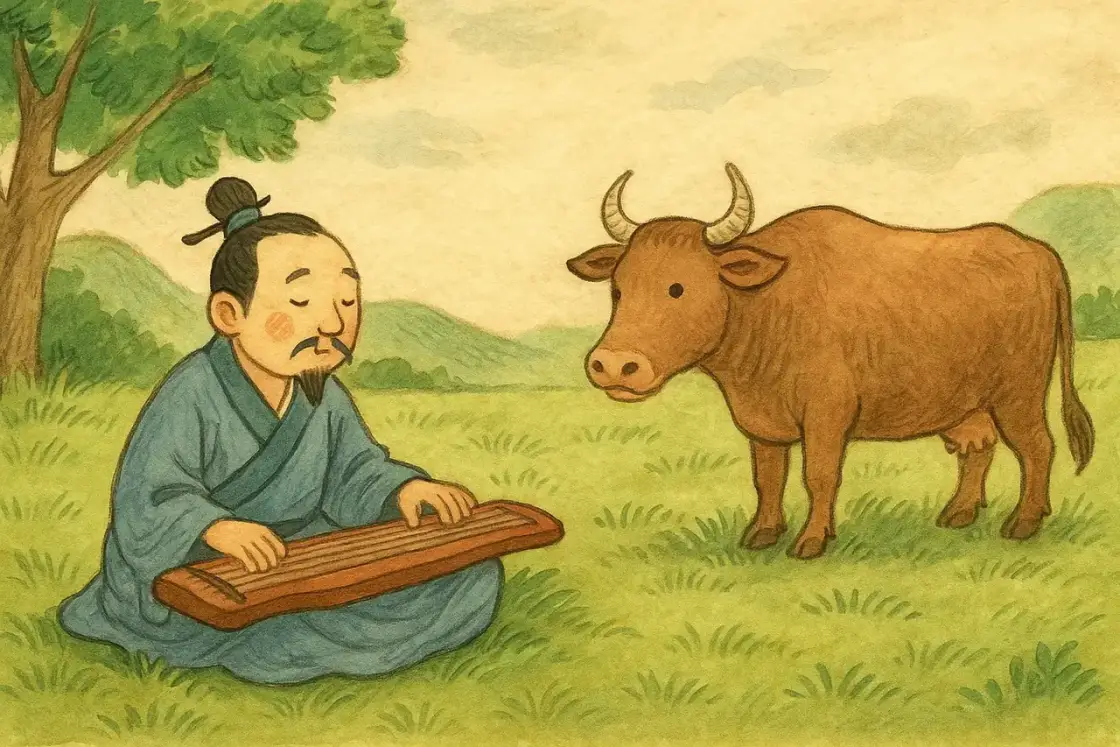
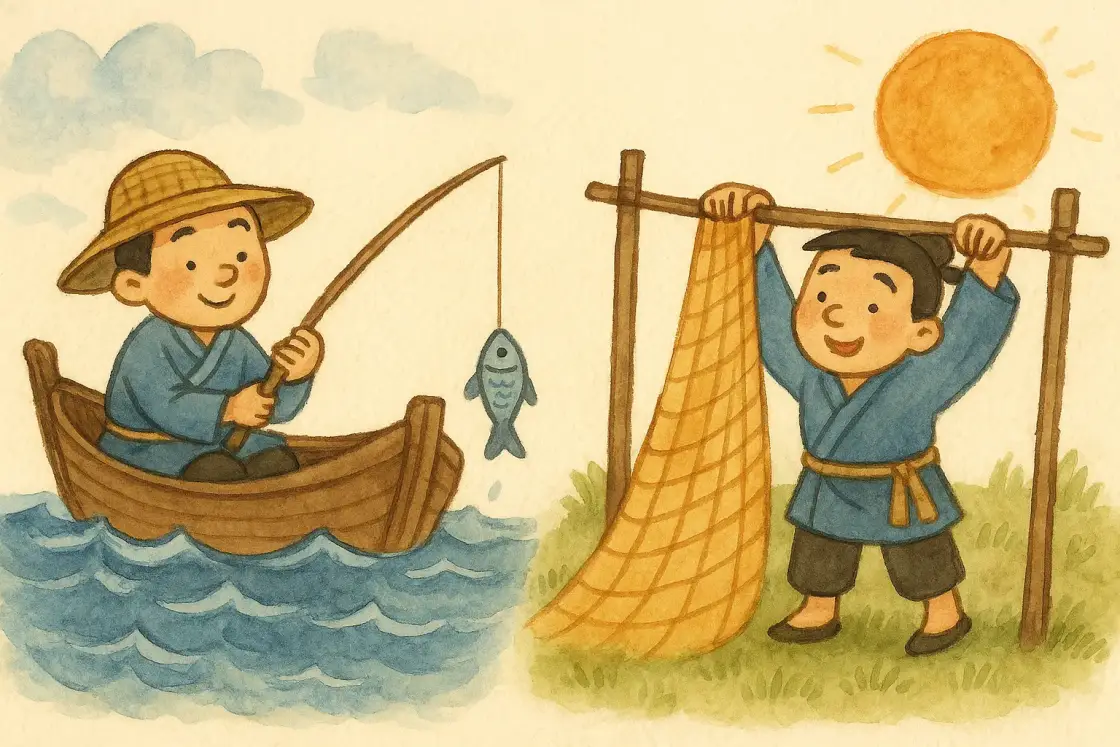
Chinese Idioms
The stories behind 成语 — the fastest way to make idioms stick.
Book Summaries
The big ideas of popular non-fiction, in graded Chinese.



Journey to the West
The Monkey King, chapter by chapter.

How to break through the intermediate plateau
- Turn pinyin off for good. Use it to rescue a single sentence, then switch it off again.
- Read series, not singles. Recurring characters and settings mean each part is easier than the last — the best ratio of reading to effort there is.
- Go for volume at 95–98% known words. Several easy stories beat one hard one. Save hard texts for one focused session a week.
- Notice connectors. 虽然…但是, 不但…而且, 既然, 不管 — these are the grammar of intermediate texts. Our grammar guide links each one to a story.
- Time yourself. Note characters per minute on a story you know well, once a month. Speed is the honest progress metric at this stage.
- Read nonfiction you care about. Background knowledge carries you through unfamiliar words — and it keeps you reading.
Key HSK 3–4 words in these stories
These are the HSK 3–4 words (HSK 3.0 list) that turn up most often across the stories on this page, so they are the ones worth knowing before you start — you'll see each of them again and again. Browse the full HSK 3 word list and full HSK 4 word list for everything else.
- 把bǎto holdin 65 of 177 stories
- 会會kuài(bound form) to reckon accountsin 63 of 177 stories
- 可是kě shìbutin 59 of 177 stories
- 又yòuagainin 52 of 177 stories
- 着著zháoto touchin 43 of 177 stories
- 还還huánto returnin 40 of 177 stories
- 地dìearthin 40 of 177 stories
- 先xiānfirstin 34 of 177 stories
- 用yòngto usein 34 of 177 stories
- 得děimustin 32 of 177 stories
- 就是jiù shìexactlyin 31 of 177 stories
- 心里心裡xīn liinside (one’s heart)in 29 of 177 stories
- 最后最後zuì hòufinalin 28 of 177 stories
- 以前yǐ qiánbeforein 25 of 177 stories
- 决定決定jué dìngto decidein 23 of 177 stories
- 然后然後rán hòuthenin 23 of 177 stories
- 发现發現fā xiànto discoverin 22 of 177 stories
- 突然tū ránsuddenin 22 of 177 stories
- 被bèiindicates passive voicein 22 of 177 stories
- 一样一樣yī yàngsamein 21 of 177 stories
- 讲講jiǎngto speakin 21 of 177 stories
- 却卻quèbutin 21 of 177 stories
- 故事gù shìnarrativein 21 of 177 stories
- 起qǐto get upin 20 of 177 stories
Read more at your level, with audio
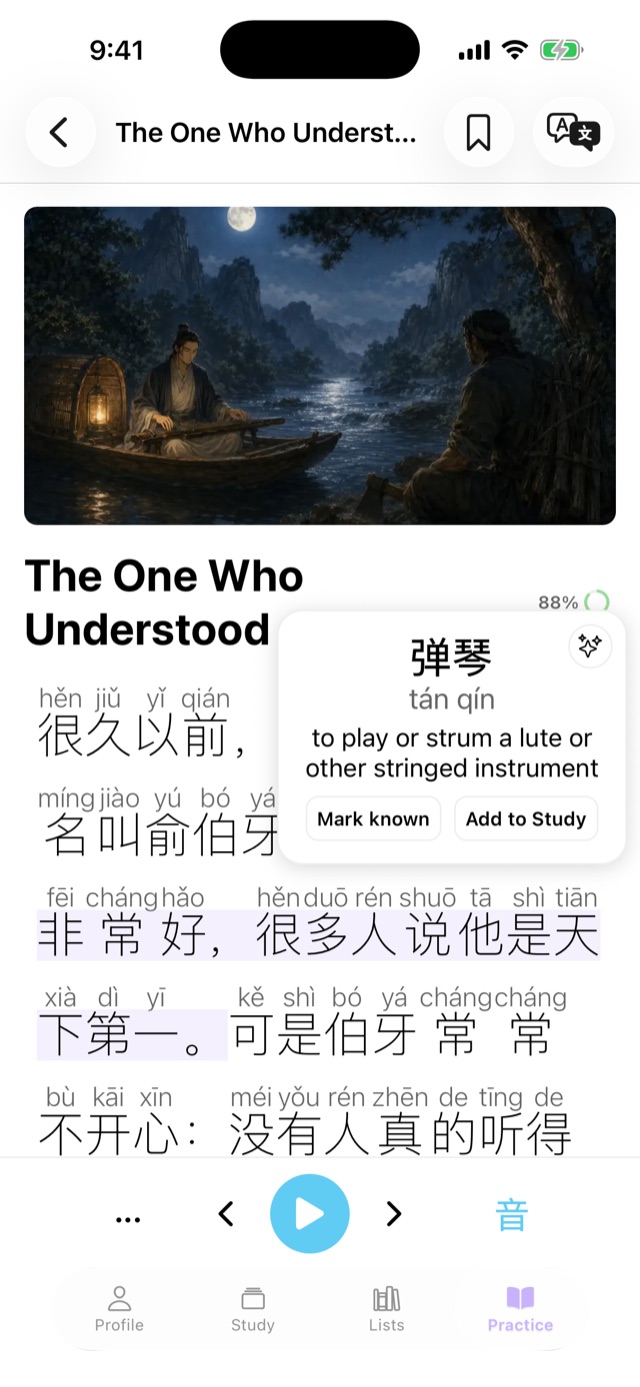
The Literate Chinese app has 289 more stories at an estimated HSK 3–4 level beyond the 177 free ones here — including the rest of the series above — out of 1,000+ graded stories.
It picks stories by the exact words you know (each one shows a % familiar), and every story is narrated in Mainland or Taiwan Mandarin so you can listen while you read.


Frequently asked questions
What counts as intermediate Chinese reading?
Roughly HSK 3–4: in the 2026 HSK 3.0 syllabus that is 997–1,994 words and 655–1,096 characters. In practice it means you can follow a paragraph without pinyin, and the limit is vocabulary and stamina rather than basic grammar.
How do I get past the intermediate plateau in Chinese?
Read more, easier. The plateau usually comes from studying hard texts slowly. Reading lots of stories where almost every word is familiar builds speed and turns half-known words into known ones.
Should intermediate learners read with pinyin?
Mostly no. Keep pinyin off by default and turn it on for a single sentence when a word stops you — every story here lets you do exactly that.
How long are HSK 3 and HSK 4 reading passages?
Our HSK 3 stories are typically about 136 characters and our HSK 4 stories about 261, with sentences averaging 14.9 and 16.8 characters.
Also useful: Not sure of your level? Take the 2-minute character test · HSK 3 and HSK 4 word lists · Traditional reading practice · Chinese grammar guide