
Dotting the Dragon's Eyes
Story behind the idiom: 画龙点睛 - Dotting the dragon's eyes
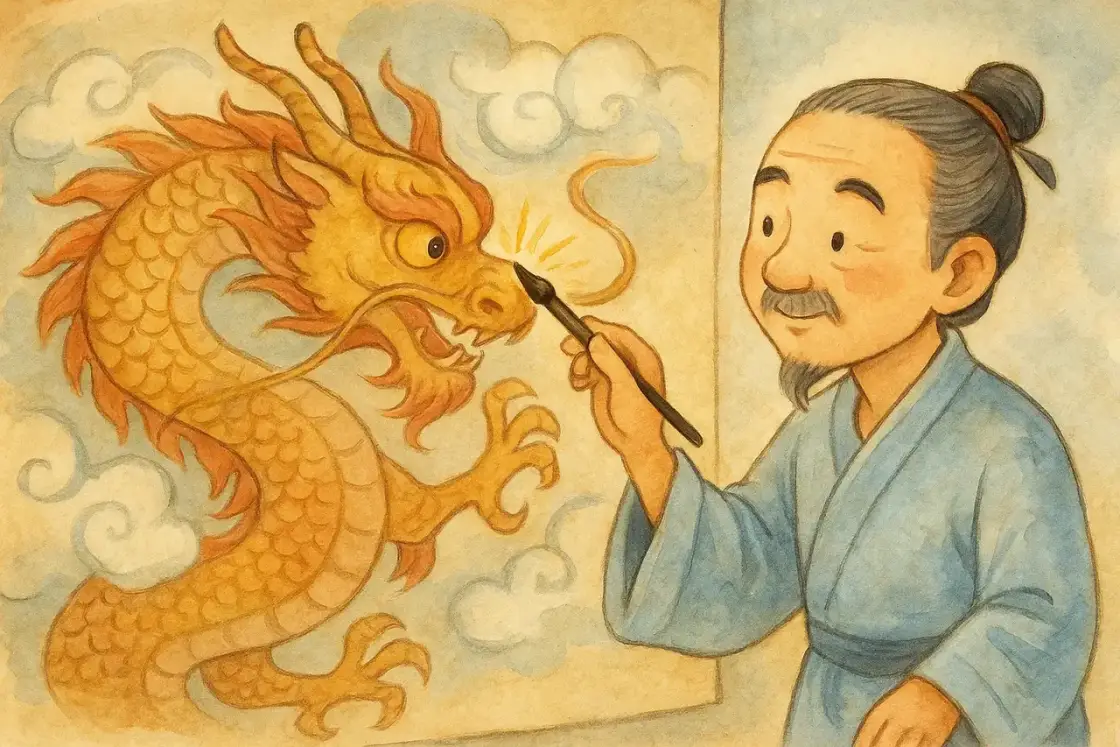
很久以前,南朝有一位画家,名叫张僧繇。A long time ago, during the Southern Dynasties, there was a painter named Zhang Sengyao.他到一座寺庙画墙。He went to a temple to paint a wall.他画了四条龙,龙身有鳞有爪,很生动。He drew four dragons, with scales and claws, full of life.但是每条龙的眼睛都空着。But the eyes of each dragon were left blank.大家觉得奇怪,问他为什么不画眼睛。People felt puzzled and asked why he didn’t paint the eyes.张僧繇笑着说,先别急。Zhang Sengyao smiled and said, “Don’t rush.”他说,等我画上眼睛,它们就会飞走。He explained that once he added the eyes, the dragons would fly away.人们不相信,还以为他在开玩笑。The crowd didn’t believe him and thought he was joking.过了一会儿,他拿起笔,在两条龙的眼睛上轻轻一点。After a moment, he lifted his brush and lightly dotted the eyes of two dragons.天上忽然打雷刮风。Suddenly thunder rolled and the wind began to blow.墙上的两条龙仿佛活了过来。The two dragons on the wall seemed to come alive.它们从墙上飞出去,飞上了天。They flew off the wall and up into the sky.另外两条没有眼睛的龙,却安安静静地留在墙上。The other two dragons without eyes stayed quietly on the wall.大家这才相信张僧繇的话。Only then did everyone believe what Zhang Sengyao had said.
后来,人们用“画龙点睛”这个成语来讲一个道理。Later, people used the idiom “huà lóng diǎn jīng” to teach a lesson.它的意思是:在一件已经做得很好的事情上,加上最后一个关键的小部分。It means adding a final, crucial detail to something already well made.这一点虽然小,却能让整个作品立刻有精神,有生命。This small touch can make the entire work feel spirited and alive.在说话和写作里,它也指一句抓住重点的话,让别人的理解更清楚。In speaking and writing, it can also mean one sentence that hits the main point so others understand better.但是要记住,点睛之前,龙身要先画好。But remember, before you dot the eyes, the body of the dragon must be well drawn.如果前面的基础不好,只靠一点点装饰,是不行的。If the foundation is weak, a tiny decoration won’t fix it.现在,我想讲一个今天的故事。Now let me share a story from today.
小林在学校要做一个社团海报。Lin had to design a poster for a school club.他用了合适的颜色,也排好了图片和文字。He chose good colors and arranged the pictures and words.看起来整齐,但好像少了什么。It looked neat, but something felt missing.老师看了说,可以试着加一个简单有力的标题。The teacher said he could try adding a simple, strong title.小林把标题改成大字,放在最上面,还加上日期。Lin changed the title to big letters at the top and added the date.他又在角落里放了一个小小的红印章图案。He also placed a small red seal icon in the corner.海报一下子有了活力,同学们都停下来多看几眼。The poster suddenly felt lively, and classmates stopped to take a longer look.大家说,这一改真是“画龙点睛”。Everyone said this change was truly “huà lóng diǎn jīng,” the perfect finishing touch.
Want to read along with audio? Every story in the Literate Chinese app is narrated by a native speaker — in Mainland or Taiwan Mandarin — so you can listen while you read, and tap any word to save it as a flashcard. See what's in the app.